Match Battery Voltage to the Motor and Controller
· MotorEnable
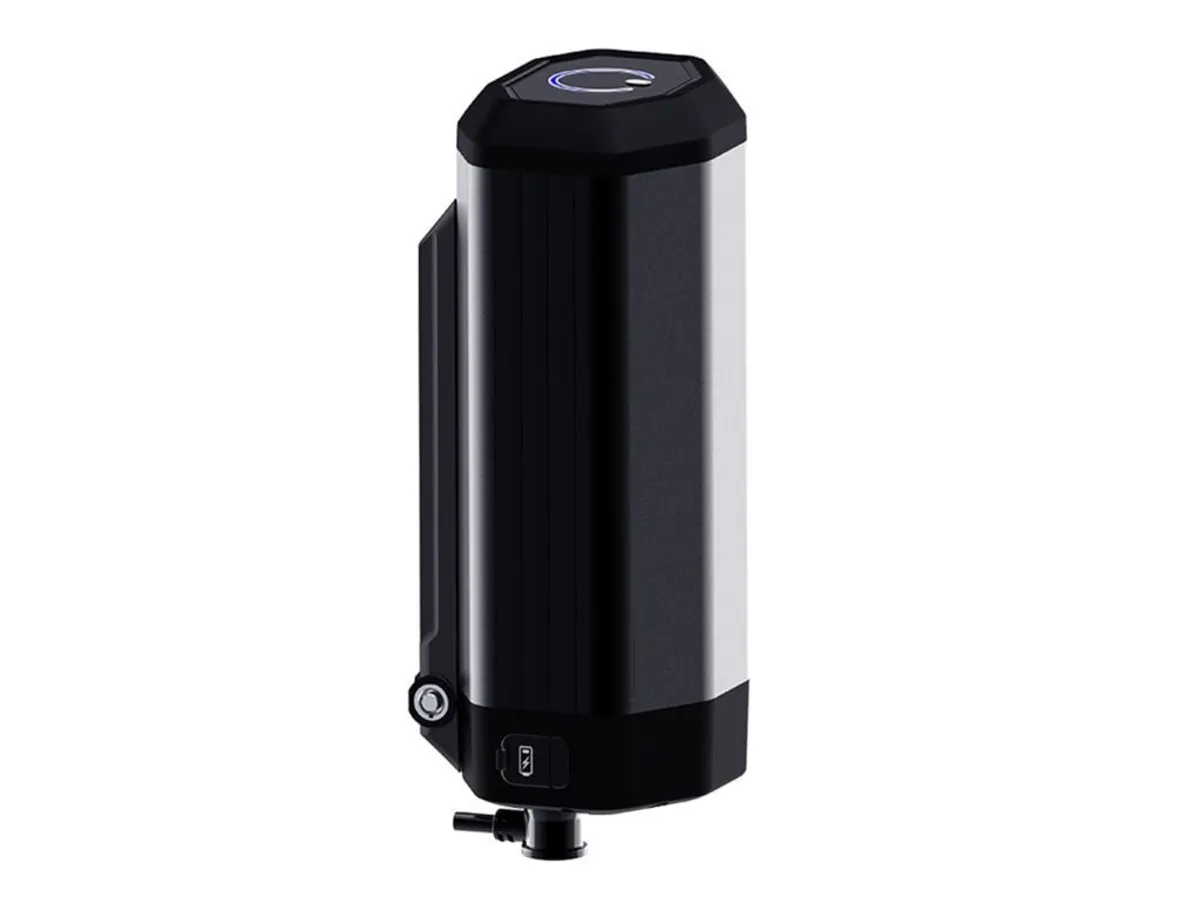
The voltage printed on the motor, the controller and the battery has to be the same system. Mixing them does not “sort of work” at reduced power. A controller’s undervoltage cutoff and current limit are set for one nominal voltage. A pack outside that window either will not start or will be asked for a current it was not built to deliver.
One system voltage
Our conversion kits state the voltage in the spec table. The 500W direct-drive hub is 36V/48V. The 1000W direct-drive and both Tongsheng mid-drives on this site are 48V. A 48V motor needs a 48V pack and a 48V controller. A charger follows the pack, not the motor badge: a 48V lithium pack is not charged with a 36V charger.
If you are building the pack yourself, series count is the voltage. Ten series of lithium-ion is the usual 36V nominal pack. Thirteen series is the usual 48V nominal pack. The case pages for Sonite 18650 and Sonite 21700 call out 10S and 13S layouts for that reason. The case does not include cells or a BMS.
What the controller page is telling you
The 24V/36V box controllers list an undervoltage cutoff around DC21.5V for 24V systems and DC31.5V for 36V, with current limits around 12A or 15A. The 48V 500W controllers cut off near DC40.5V and limit current near 25A. Those figures are why a 48V motor does not belong on a 36V controller: the cutoff and the current ceiling are for a different pack.
Shape is a mechanical choice after the voltage is settled. A round housing exists so the same 24V/36V electronics fit a tube. It is not a way to run a different voltage.
A short check before the quote
Write three numbers in the inquiry: motor nominal voltage, pack nominal voltage (or series count), and the controller family. If any one of the three is still “whatever you recommend”, say which parts you already hold in stock. We will not pair a 72V high-power hub with a 36V case just because both are on the site.